THE PRACTICE ROOM
Practise reading tarot
What do you do after you turn a card over? Try three fictional situations. Make your own reading first, then open the worked example to see what you noticed in common and what you read differently.
Try this three-step method: name one detail you can actually see, offer one interpretation, then choose one small action or question. The detail is evidence about the illustration, not evidence that something will happen. These are fixed practice draws, not personal readings. You can do the exercises in your head or on paper; there is nothing to submit.
1. One card: what deserves my energy today?
It is a free afternoon. You planned to spend it on a hobby, but after a busy week you feel flat. Your card is the Four of Swords.
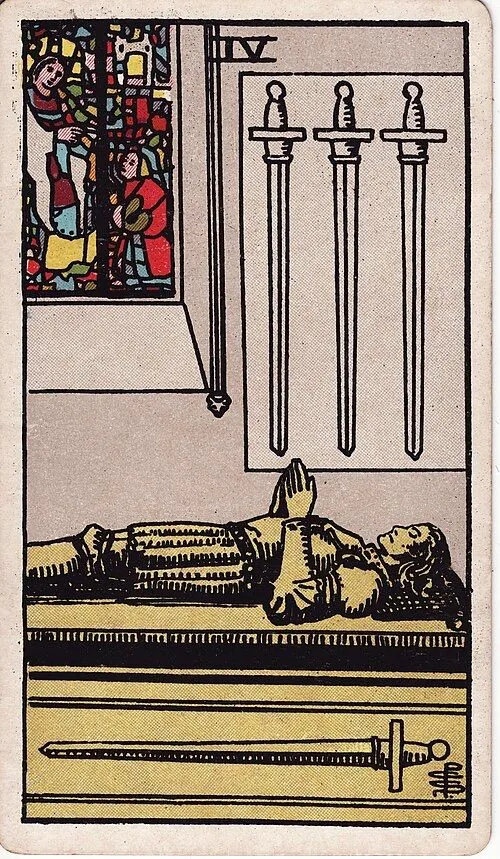
Look first: what is the figure doing, and where are the swords? What would a short, deliberate pause look like in this situation?
Show the Four of Swords reading
Observation: the figure is still, while the swords remain in the picture. I read that as stepping away from a demand without pretending it has disappeared.
Interpretation: there is a choice between forcing a productive afternoon and giving yourself enough space to see what you actually want to do. That needn’t mean cancelling the hobby. You could take twenty minutes without a screen, then decide whether a small part of the project still sounds enjoyable.
Compare: you might instead see the stillness as a prompt to finish the day quietly. Both readings can fit the image. Neither tells you why you are tired, or that resting will guarantee a good evening.
2. A symbolic NO: should I pick my design today?
You have two sketches for a personal project. You like the look of one and the clarity of the other. With a day to spare, you ask whether to choose right now and draw the Two of Swords.
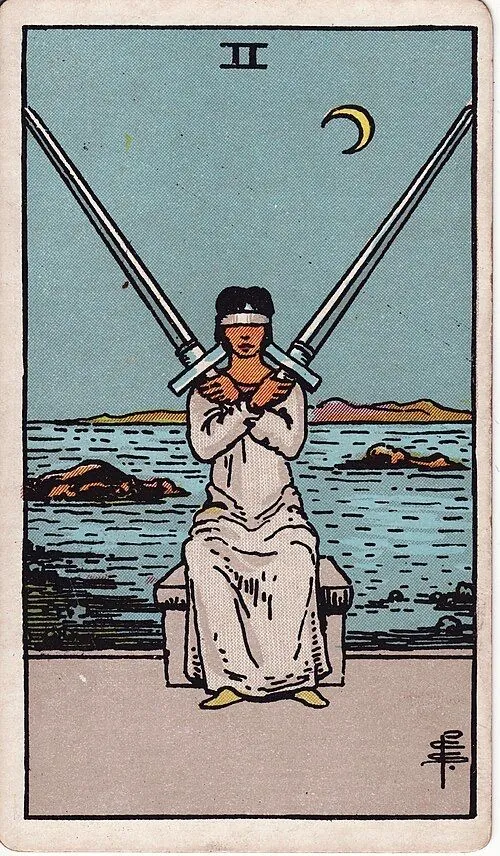
Look first: how might the crossed swords and the blindfold suggest different reasons for the pause? What could you learn before deciding?
Show the Two of Swords reading
Observation: two swords are held in balance, but the figure cannot see. Arcana assigns this card a symbolic NO. Here, I’d read that as “not yet,” because there is an easy way to learn more before choosing.
Try it: write down what the design needs to do. Put both sketches at the same size and ask someone who has not seen them to describe what each one communicates. Set a time to decide after that test, so a pause doesn’t turn into another week of indecision.
Compare: the blindfold can also suggest tuning out other people’s opinions. If you already know which sketch does the job and are only looking for permission, asking more people might not help. The card cannot settle which of those two situations you’re in; the facts can.
3. A spread: how can I make a new hobby stick?
You’ve been learning to draw. Long sessions felt satisfying, but you keep missing them when the week gets busy. Try reading these cards as a sequence, not as three separate definitions.
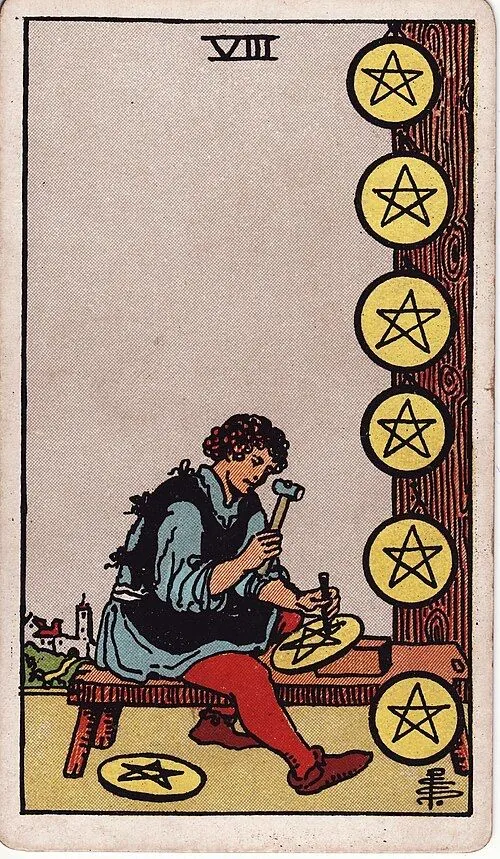
PAST
Eight of Pentacles
What did repetition already teach you?
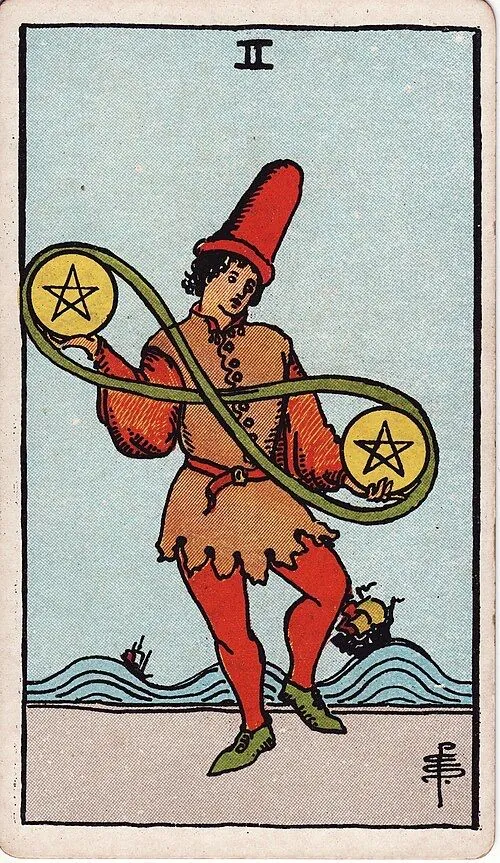
PRESENT
Two of Pentacles
What are you juggling this week?
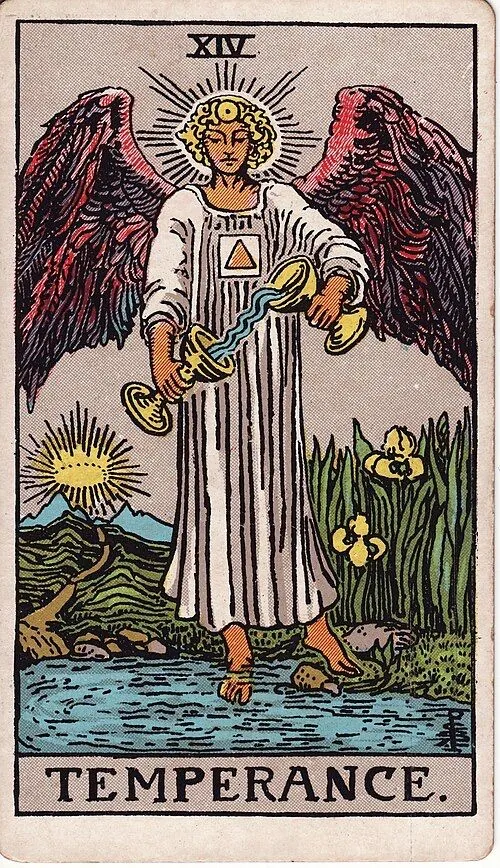
POSSIBLE FUTURE
Temperance
What rhythm could combine effort and rest?
Before you reveal: complete one sentence: “I learned ___ through repetition, but now I’m balancing ___, so I could try ___.”
Show the connected three-card reading
The completed pentacles behind the craftsperson suggest that repeated attempts leave a visible record of progress. But the middle card puts that practice into a moving week: the figure is balancing two things, and even the sea behind them isn’t still. More discipline alone may not solve a scheduling problem.
Temperance is a possible response, not a prediction. The movement between the cups gives me a way to picture adjusting the mix: try a ten-minute sketch twice during the week and keep one longer session optional. Review what actually happened after seven days, instead of deciding in advance that a shorter session doesn’t count.
Change one position: if Temperance were in the past, it might describe a balance you’ve already found elsewhere. In the possible future, it suggests a balance you could experiment with. The picture is unchanged; the position changes the question you ask of it.
Take a field note into your next reading
- I noticed: a specific detail in the picture.
- It might suggest: a theme that fits my question or the card’s position.
- Another reading could be: one reasonable alternative.
- I’ll check or try: something small that doesn’t depend on the card being right.
Keep interpretations that help you think more clearly and leave the rest. Explore the full card library if you want a second perspective.
Try it with your own draw