ONE QUESTION. ONE CARD.
Yes or no tarot questions
A clear question gives you something useful to reflect on. Keep it simple, draw one card, and consider what its answer brings to mind.
Try a free yes/no readingHow to ask a yes-or-no tarot question
- Choose one idea. “Am I ready to begin a creative project?” is easier to reflect on than a question that combines work, money and relationships.
- Focus on your choices. Ask about an action or an attitude you can explore. A card cannot establish what another person thinks or confirm an event will happen.
- Make the question specific. Name the step you are considering. “Could I make time for a short walk today?” gives you more to work with than “Will everything improve?”
- Draw one card. On the reading page, choose the Yes or no tab. Type your question if you like, or hold it in mind, then choose from the shuffled 78-card deck.
- Read the meaning as well as the answer. Note one thought or small action you want to take away.
Questions you could ask
Use these as starting points and adjust the wording to fit your own situation. The most useful question is one you understand clearly before you draw.
Your day
- Would a quieter evening help me reset?
- Am I ready to make room for a new habit?
- Could I give myself a little more patience today?
Creativity and projects
- Am I ready to try a small creative project?
- Could I begin with the tools I already have?
- Would a short pause help me see my next step?
Connections
- Am I ready to start an honest conversation?
- Could I make more space to listen?
- Would a clearer boundary help me feel balanced?
If your question begins with “How?” or “What?”, it may suit a three-card reading better. “What can I learn from this change?” invites several themes to explore instead of a single yes or no.
What does the answer mean?
Arcana gives each card a YES or NO association. These associations are Arcana’s interpretive convention; tarot readers do not all use the same system. The reading does not analyse your typed question or check the facts behind it.
A YES can invite movement: consider what a manageable first step would look like. It does not guarantee success or mean you should ignore practical details.
A NO can invite a pause: look at the card’s theme before deciding whether to wait, rethink the question or try a different approach. It does not mean every possibility is closed.
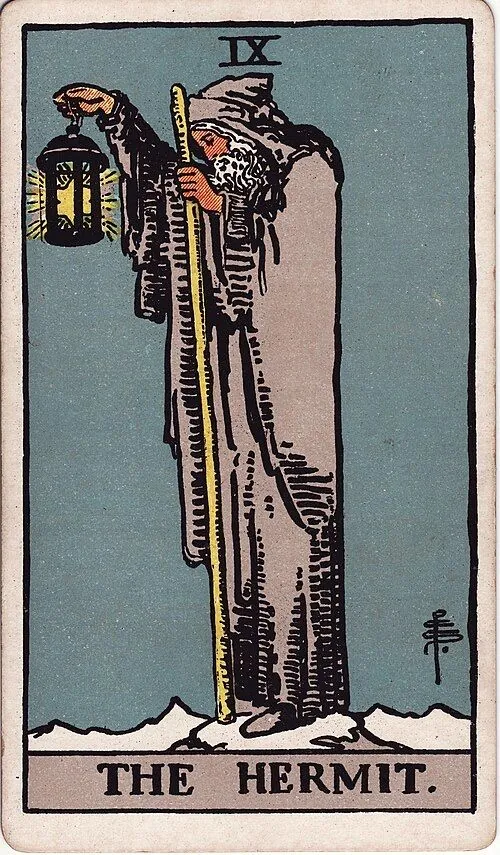
The Hermit: a NO with room to reflect
Arcana connects The Hermit with solitude and insight. Its invitation is to make a little space to think alone.
For a question about rushing into something new, this could prompt you to pause and check your priorities. It is an example of interpretation, not an answer drawn for you.
Ask yourself: “What do I actually think about this answer?” Your response may reveal an uncertainty or preference worth exploring.
Common yes/no questions
Can I ask about love?
Yes. Focus on your own choices, such as readiness for a conversation or the boundaries you need. A card cannot verify someone else’s feelings.
Should I ask the same question again?
Pause after your reading and give yourself time to reflect. Drawing repeatedly until you find a preferred answer can make it harder to hear your own judgement.
Do I have to type my question?
No. You can simply hold it in mind. If you type it, the reading feature keeps it in the current tab and does not send it to a reading service. See our All 78 card meanings · About & how it works · privacy policy for advertising and website request details.
Is the reading free?
Yes. Arcana’s yes/no reading uses all 78 cards, with no payment or account needed. If you are new to the deck, our beginner guide explains the basics.
Bring one clear question
Take a breath, choose Yes or no on the reading page, and draw a card. Read its meaning, then decide what is useful to you.
Ask your question